How the Himalayas Protect India from Cold Winds
Introduction: A Wall Made by Nature
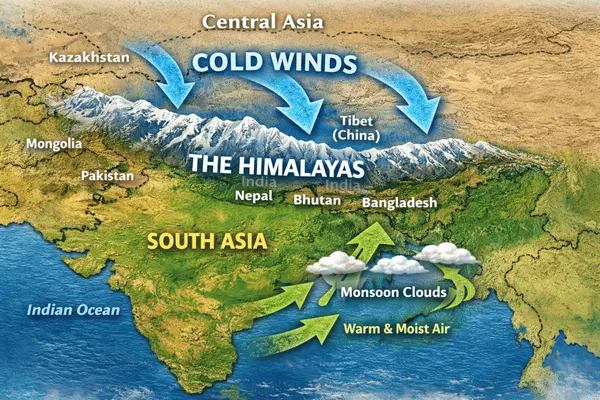
The Himalayas protect India from cold winds by blocking icy air masses from Central Asia, preventing extreme winter conditions across northern India.
Imagine Central Asia in winter.
Temperatures drop far below zero. Winds are sharp, dry, and bitterly cold. Now imagine those winds freely moving south into India, Nepal, Bhutan, and Bangladesh.
Life here would be very different:
- Much colder winters
- Shorter farming seasons
- Less rainfall
- Harsher living conditions
But that doesn’t happen — and the reason is simple yet powerful.
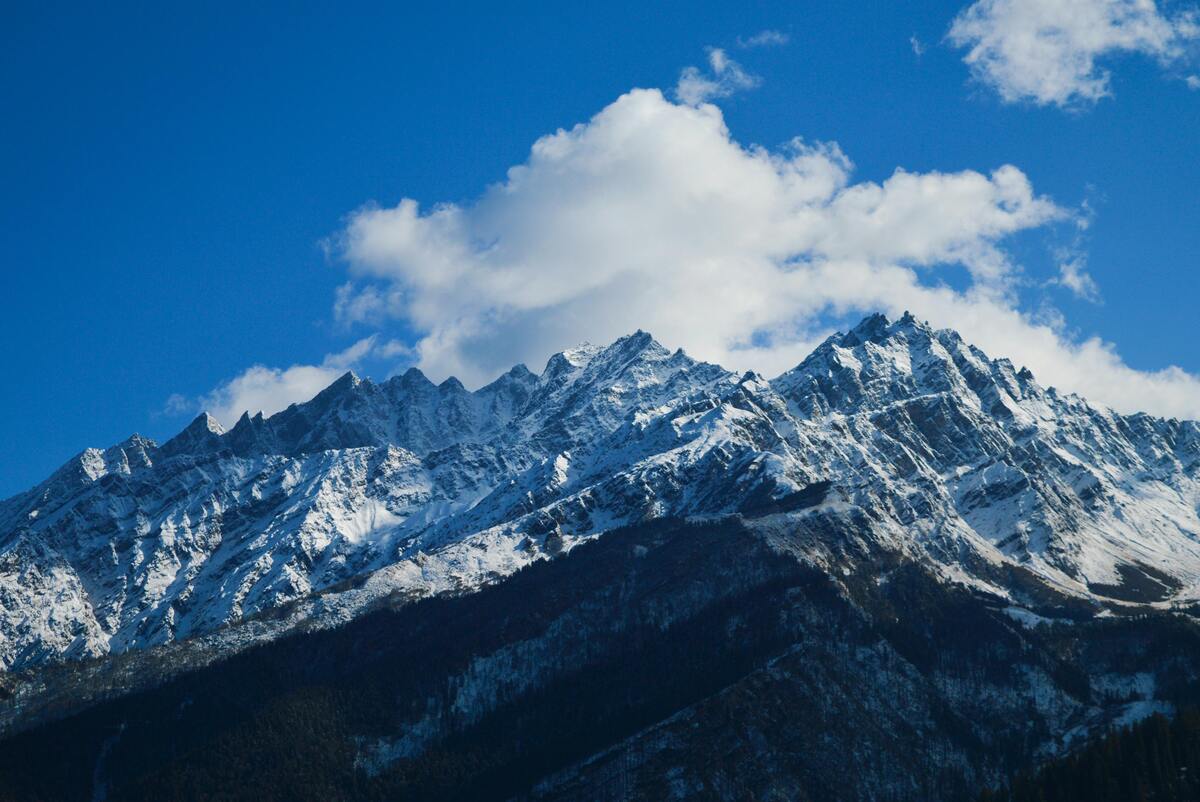
The Himalayas stand in the way. Stretching over 2,400 kilometers, this mountain range is more than just a collection of snow-capped peaks. It is one of the most important climate regulators on Earth. Without it, South Asia would feel more like Central Asia — dry, cold, and extreme.
This article explores how the Himalayas block cold winds from Central Asia, why this matters, and how this invisible protection shapes climate, rivers, agriculture, and human life.
Why Cold Winds from Central Asia Don’t Reach South Asia
Central Asia includes regions like:
- Mongolia
- Kazakhstan
- Parts of western China
- The Tibetan Plateau
These areas are:
- Far from oceans
- Mostly dry
- Extremely cold in winter
Cold air is heavy and naturally moves from high-pressure (cold) zones to warmer regions. If nothing stopped it, these icy winds would flow straight into South Asia.
But they don’t — because the Himalayas rise like a giant wall in their path.
The Himalayas: More Than Just Tall Mountains
When people hear “Himalayas,” they often think of:
- Mount Everest
- Snow peaks
- Treks and adventure
Climatically, the Himalayas are:
- A wind blocker
- A temperature regulator
- A moisture controller
With peaks often above 7,000–8,000 meters, the Himalayas are tall enough to stop large-scale atmospheric movements. Cold winds from Central Asia cannot cross them easily. Instead, these winds are:
- Deflected
- Weakened
- Trapped on the northern side
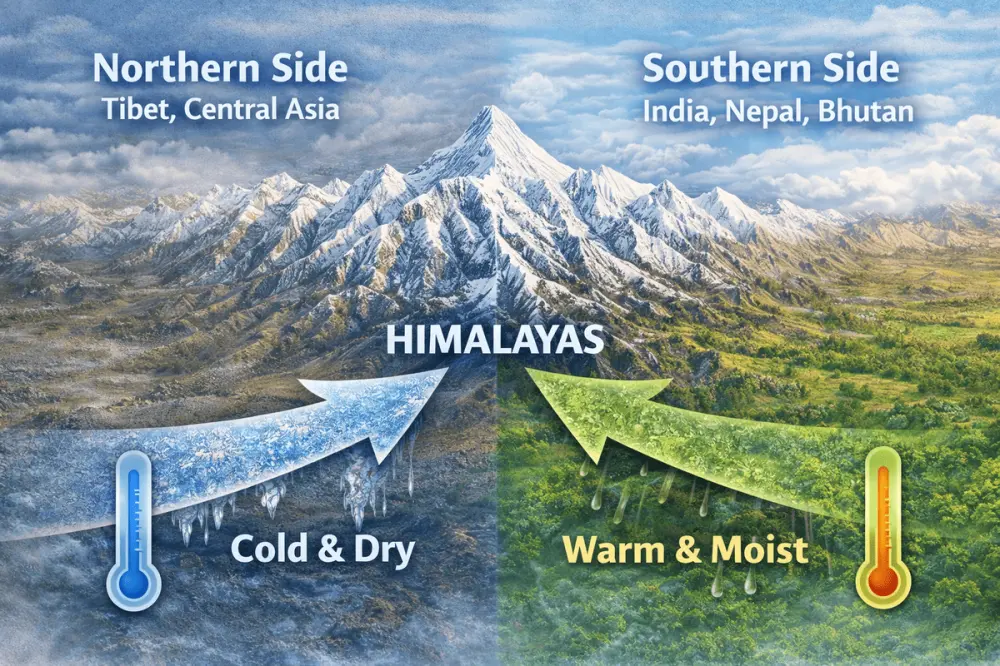
Over time, this separation creates two very different climate zones on either side of the range: cold and dry north, warmer and wetter south.
Based on What We Know About the Himalayas, Why Do They Protect India from Cold Winds?
Based on what we know about the Himalayas, they protect India from cold winds because of their enormous height, width, and continuous structure. The mountain range rises between Central Asia and the Indian subcontinent, creating a physical barrier that cold, dry air cannot easily cross.
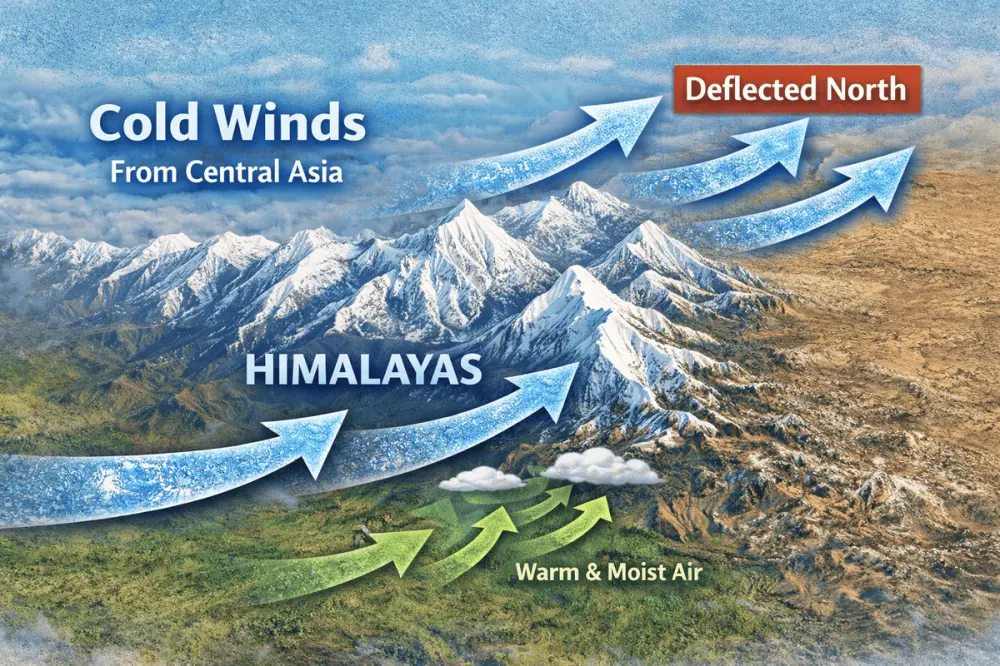
Cold winds from Central Asia usually travel southward during winter. When these winds reach the Himalayas, they are forced upward or diverted away, losing strength in the process. Because cold air is heavy and slow-moving, it struggles to climb over mountains that rise more than 7,000 meters above sea level.
As a result, most of this freezing air remains trapped on the northern side of the range. This is why regions beyond the Himalayas experience much colder and drier winters, while India remains relatively warmer. In this way, the Himalayas act as a natural shield, protecting India from extreme cold winds and helping maintain a more stable and livable climate.
What Happens When Cold Winds Hit the Himalayas?
Let’s imagine cold winds moving south from Central Asia.
They:
- Travel across dry plateaus
- Hit the massive Himalayan wall
- Lose strength
- Change direction or settle north of the range
The mountains force air to rise, and rising cold air loses momentum. This process acts like a natural brake system.
As a result:
- Northern side (Tibet, Central Asia): cold and dry
- Southern side (India, Nepal, Bhutan): warmer and wetter
Same planet. Same latitude. Very different climates.
The same mountain barrier that blocks cold winds also influences the Indian monsoon system by trapping warm, moisture-rich air.
Why South Asia Is Warmer Than Central Asia
This is one of the most fascinating results of the Himalayas.
Cities like:
- Delhi
- Kathmandu
- Dehradun
Are much warmer in winter than places in Central Asia at similar latitudes.
Without the Himalayas:
- Winters would be much colder
- Agriculture would be limited
- Dense populations would struggle to survive
The Himalayas make South Asia livable.
The Hidden Link Between Mountains and Monsoon
The Himalayas don’t just block cold winds — they also help trap warm, moist air.
Here’s how:
- Warm air from the Indian Ocean moves north
- Himalayas stop it from escaping
- Moisture condenses
- Rainfall occurs
This is one reason the Indian subcontinent receives strong monsoon rains, as explained in How the Himalayas Shape the Indian Monsoon – Nature’s Weather Barrier
Without the Himalayas:
- Moist air would drift north
- Rainfall would reduce
- Rivers would weaken
- Agriculture would suffer
So when farmers depend on monsoon rains, they are indirectly depending on the Himalayas.
How Rivers Are Connected to This Climate Shield
Many major rivers exist because of this climate balance:
- Ganga
- Yamuna
- Brahmaputra
- Indus
The Himalayas:
- Store snow and glaciers
- Release water gradually
- Maintain year-round river flow
Cold winds blocked → stable temperatures → snow accumulation → sustained rivers
Everything is connected.
Learn more in : Himalayan Rivers: Origins, Importance, and What Their Future Holds.
Human Life Shaped by a Mountain Wall
Think about daily life in South Asia:
- Crops like rice and wheat
- Dense cities
- Long growing seasons
- Forests and biodiversity
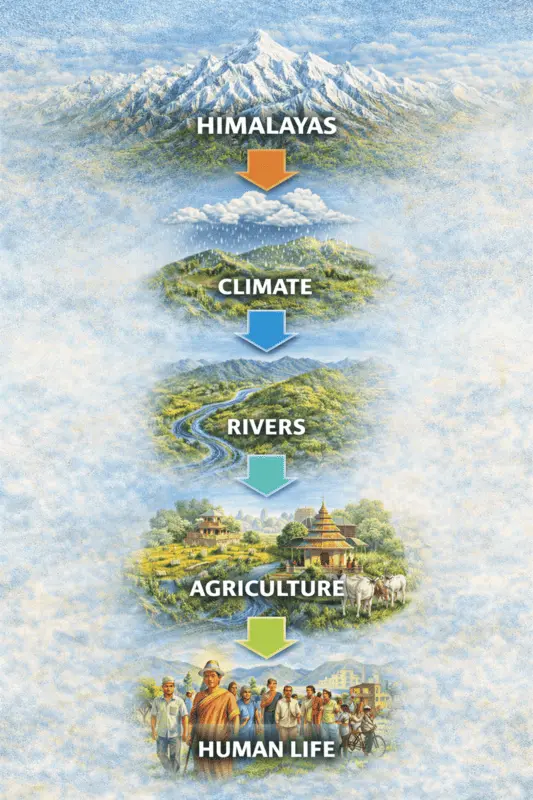
None of this would exist in the same way or at the same scale without the Himalayas blocking cold winds.
Even traditional housing, clothing, food habits, and festivals are shaped by this relatively moderate climate.
The Himalayas quietly influence:
- What we eat
- How we live
- Where we settle
What If the Himalayas Didn’t Exist?
It’s uncomfortable to imagine, but useful to understand their importance.
South Asia would be:
- Much colder
- Drier
- Less fertile
- Sparsely populated
Similar to parts of Central Asia today.
The Himalayas don’t just protect landscapes — they protect civilizations.
Climate Change: Is This Natural Shield Weakening?
This is where awareness becomes important.
Climate change is:
- Melting glaciers
- Altering wind patterns
- Weakening climate stability
Scientists are already observing declining snowfall in the Himalayas, which affects this natural protective system.
While the Himalayas will not disappear, their climate-regulating role is under stress.
Unstable snowfall, erratic rainfall, and rising temperatures affect how effectively this natural barrier works.
Protecting the Himalayas is not just about mountains — it’s about protecting climate balance for billions of people.
Why This Matters for Responsible Travel
Understanding this makes travel more meaningful.
When you visit the Himalayas, you are not just seeing beautiful landscapes.
You are standing on a system that protects entire regions from extreme climate.
Responsible travel means:
- Respecting fragile ecosystems
- Reducing environmental pressure
- Supporting local communities who protect these landscapes
Damage here doesn’t stay local — it affects climate far beyond the mountains.
Final Thoughts: A Silent Guardian
The Himalayas don’t announce their role loudly.
They don’t move.
They don’t speak.
Yet every warm winter morning in North India, every monsoon-fed field, every flowing river is proof of their presence.
By blocking cold winds from Central Asia, the Himalayas quietly shape life across South Asia.
Understanding this changes how we see mountains — not as obstacles, but as guardians.
And guardians deserve respect.
Related Articles
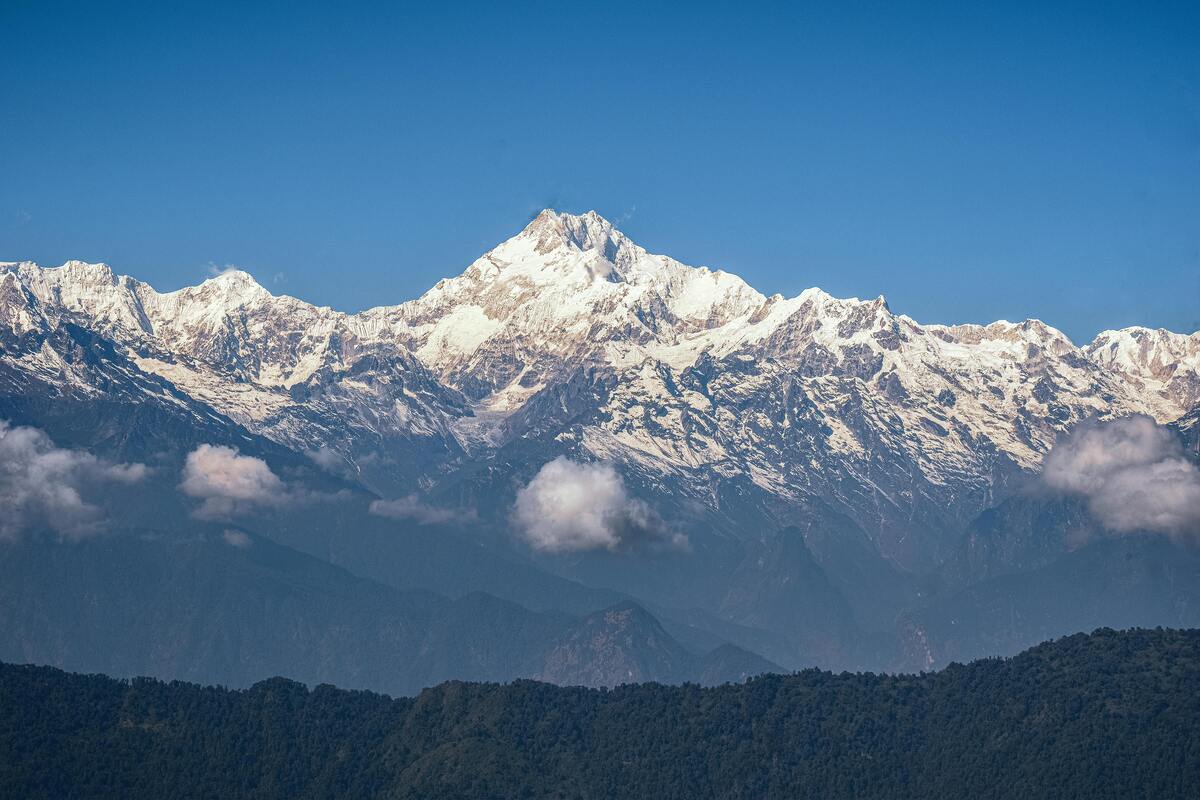
Why Himadri is the Highest Himalayan Range (Explained in a Simple Way)
Why is Himadri higher than other Himalayan ranges? Discover the simple reasons behind its height with an easy, beginner-friendly explanation.
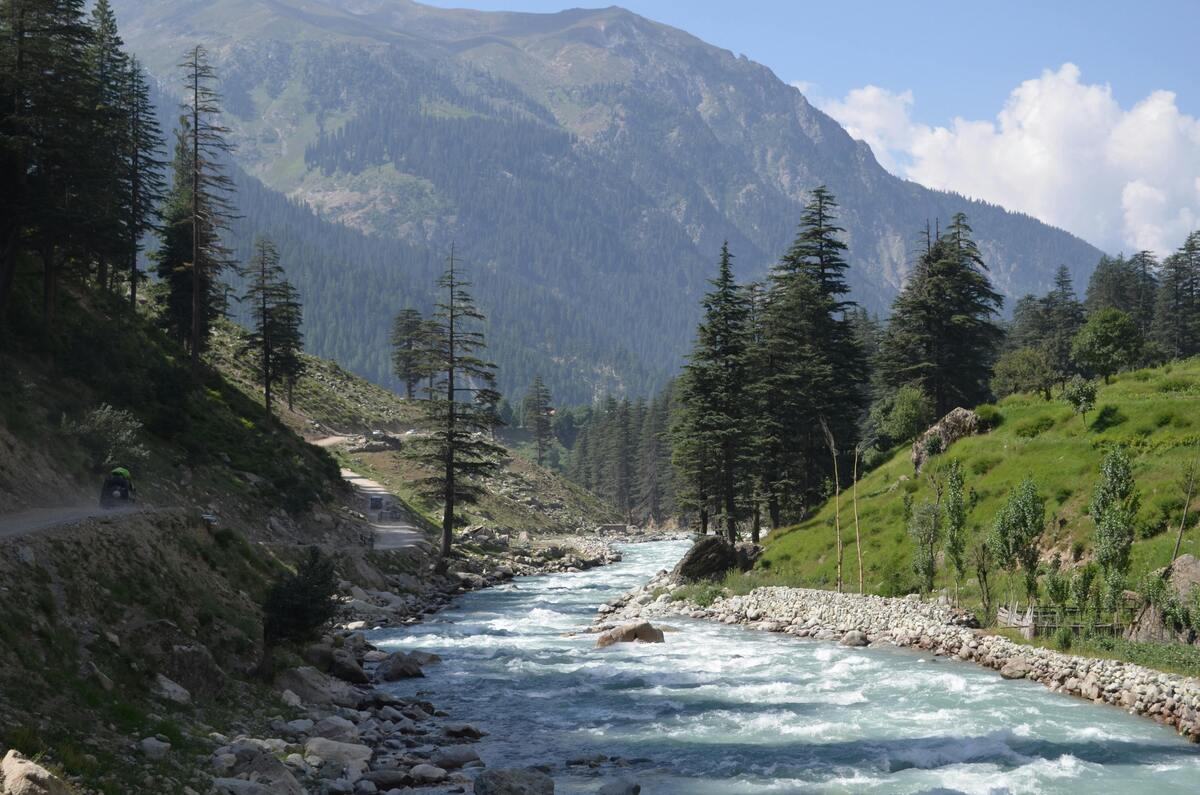
Climate Change Impact on Himalayan Rivers
Climate change is rapidly affecting Himalayan rivers like the Ganges, Brahmaputra, and Indus. Learn how glacier melting, changing rainfall, and floods threaten water security for nearly 2 billion people.
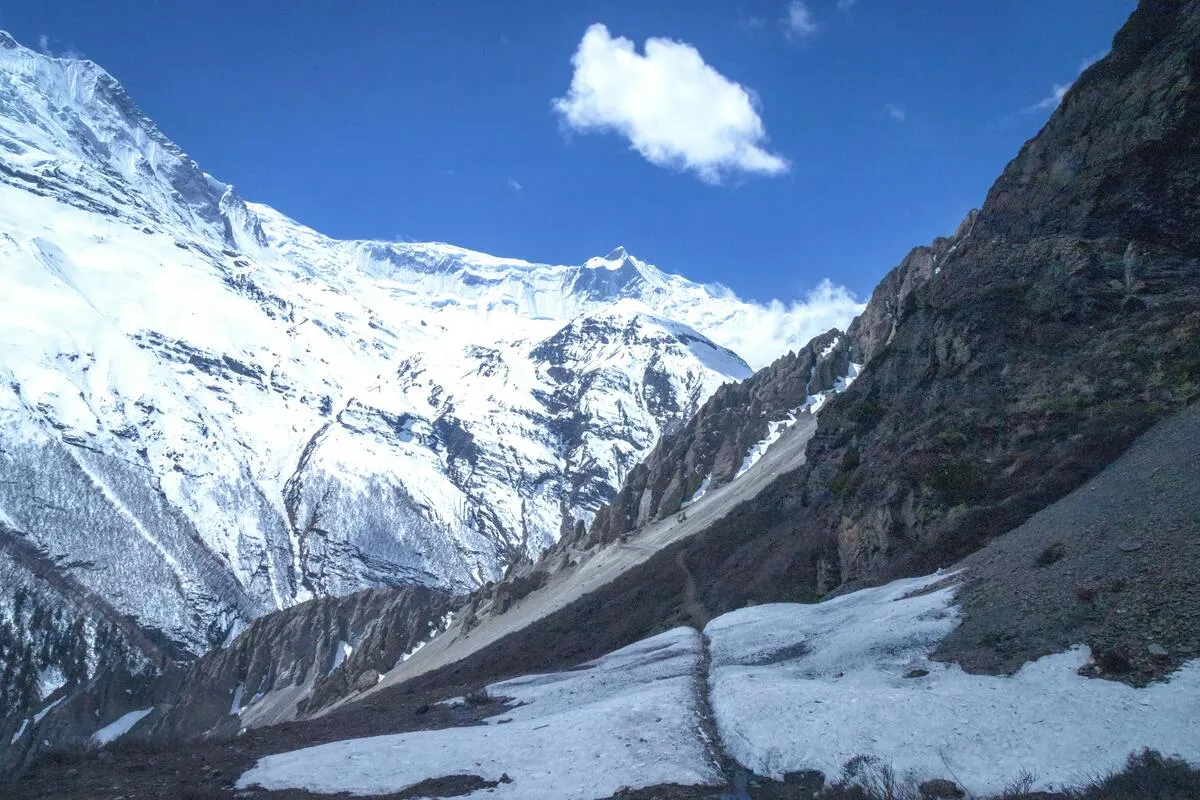
Why Himalayan Glaciers Are Melting Faster Than Ever — And Why the World Should Care
Himalayan glaciers are melting faster than ever. Discover the real causes, scientific warnings, and what glacier loss means for rivers, communities, and climate.